
Fast Reps, Fast Athletes: How We Use Velocity-Based Training to Build Speed
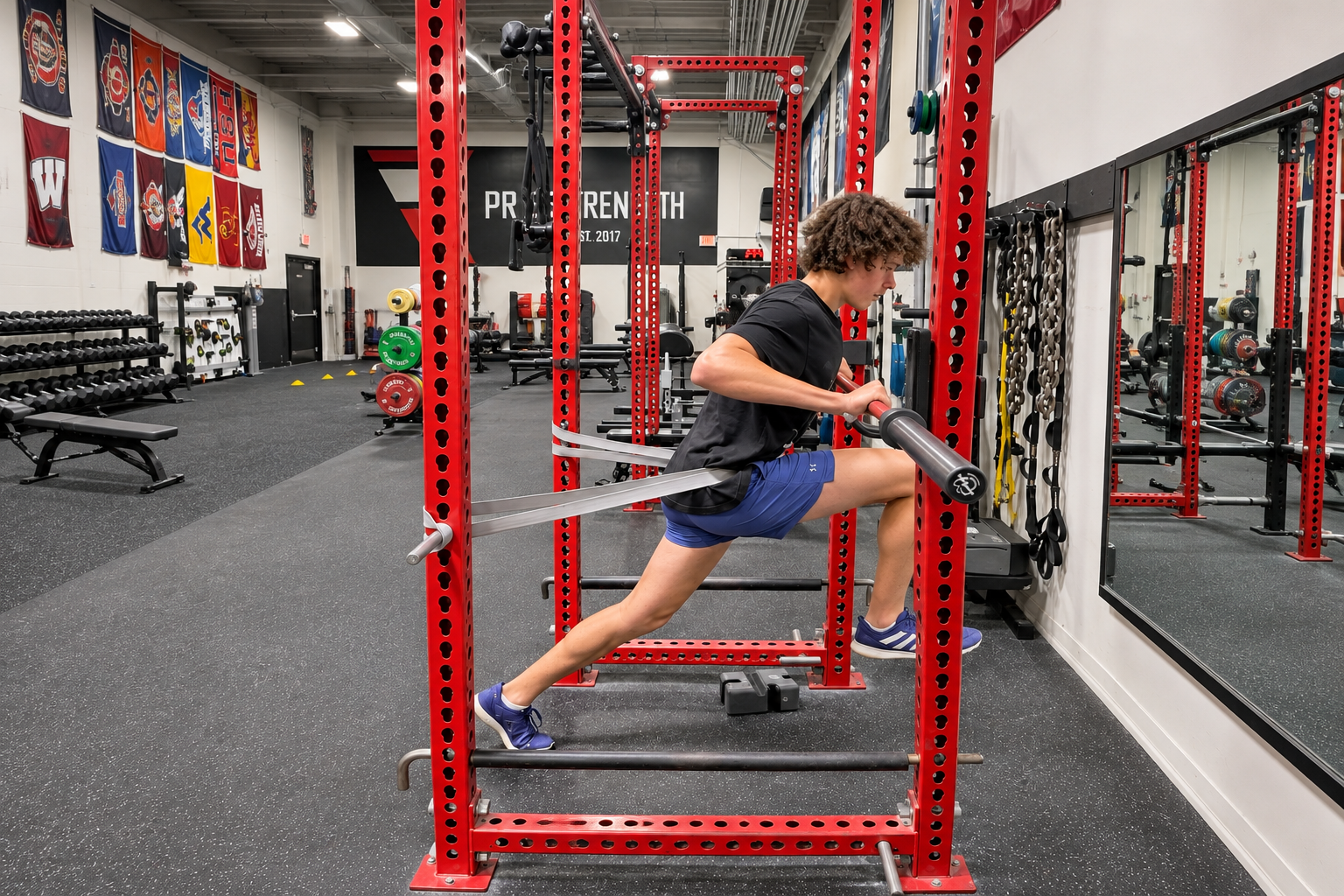
In our weight room, we don’t just track how much an athlete lifts. We track how fast they lift it. That one change is how we make strength training build speed.
In my last post I talked about why speed has to be trained year-round. Sprinting is the skill, but every stride comes down to how much force an athlete puts into the ground and how fast they apply it. Lifting builds that force. Velocity-based training (VBT) makes sure it’s the fast kind.
Here’s what VBT is, and exactly how we use it to turn weight room work into speed on the field.
Why bar speed matters for sprint speed
Strength is how much force an athlete has. Speed depends on how fast they can use it. At top speed, the foot is on the ground for about a tenth of a second. Force that takes longer than that to produce never makes it into the stride.
Traditional lifting only tracks weight and reps. Two athletes can both squat 225 for 5, but if one moves the bar twice as fast, they’re training two very different things. Without measuring speed, you can’t tell the difference.
VBT fixes that. We use GymAware RS, powered by VALD, which attaches to the bar and measures how fast it moves on every rep, in meters per second. That number tells us what each set is actually building, and whether it’s helping the athlete run faster.
How we use velocity-based training in the weight room
1. Every set has a target speed
Bar speed tells us what a lift is training. We pick the zone first, then find the load that hits it.
| Bar speed (approx.) | What it trains | Example |
|---|---|---|
| Under 0.5 m/s | Max strength | Heavy squats and deadlifts |
| 0.5–0.75 m/s | Accelerative strength | Moderate-heavy, fast-intent lifts |
| 0.75–1.0 m/s | Strength-speed | Hang cleans, trap bar jumps |
| 1.0–1.3 m/s | Speed-strength | Light loaded jumps, fast lifts |
| Over 1.3 m/s | Starting strength / pure speed | Unloaded jumps, throws |
2. The load adjusts to the athlete’s day
A student athlete’s readiness changes daily: games, practice, tests, sleep. A percentage from a max they hit two months ago doesn’t know that. Bar speed does. If the bar is slow, we lower the weight to stay in the right zone. If it’s flying, we add load.
3. Sets end when speed drops
We set a speed cutoff for each set. Once reps slow down past it, the set is over. That keeps every rep fast and stops athletes from piling up fatigue that makes them slower. No junk reps.
4. Athletes see every rep
Live feedback changes how hard athletes try. When the number is on the screen, they chase it and compete with each other. Intent goes way up, and intent is what builds speed.
5. We track real progress
Moving the same weight faster is a power gain, even if the number on the bar doesn’t change. We track bar speed at set loads over time so athletes and parents can see power improving, not just strength.
Making sure it shows up on the field
The weight room only matters if athletes run faster. GymAware tells us what’s happening on the bar. Then we check it against sprint times on our turf.
- VALD ForceDecks show how much force an athlete produces, how fast they produce it, and whether one leg is doing more work than the other. That tells us whether an athlete needs more strength, more power, or more elasticity.
- Laser timing gates measure acceleration and top speed on a regular basis. If the numbers in the weight room go up and the sprint times don’t, we change the plan.
- Sprinting comes first. Speed work happens when athletes are fresh. Lifting and power work support it, never replace it.
This is the difference between “getting stronger” and getting faster. We test, train, and retest so every athlete’s plan is built for what they need.
How ADP puts it all together
In our Athlete Development Program (ADP), VBT guides every lift, and the bar speed zones shift with your athlete’s season.
- Off-season: heavier, slower zones to build strength, plus sprint mechanics
- Pre-season: shift into faster bar speeds to turn strength into game speed
- In-season: short, fast sets with tight speed cutoffs so athletes stay fast without added fatigue
- All year: regular testing on VALD ForceDecks and laser timing gates, with quarterly report cards for parents
Find out where your athlete’s speed is coming from
Every athlete starts with a 1-hour evaluation ($105). We’ll test force, power, and sprint speed, then build a plan from the results. Want to talk first? Book a free 15-minute consult at PRStrengthTraining.com.
PR Strength · 18761 N Frederick Ave, Unit T, Gaithersburg, MD · @pr.strength
Ready to Get Stronger, Faster, Better?
Connect with PR Strength!
Sign up to get expert tips, training insights, and exclusive offers from PR Strength!