
Why Speed Is Built Year-Round
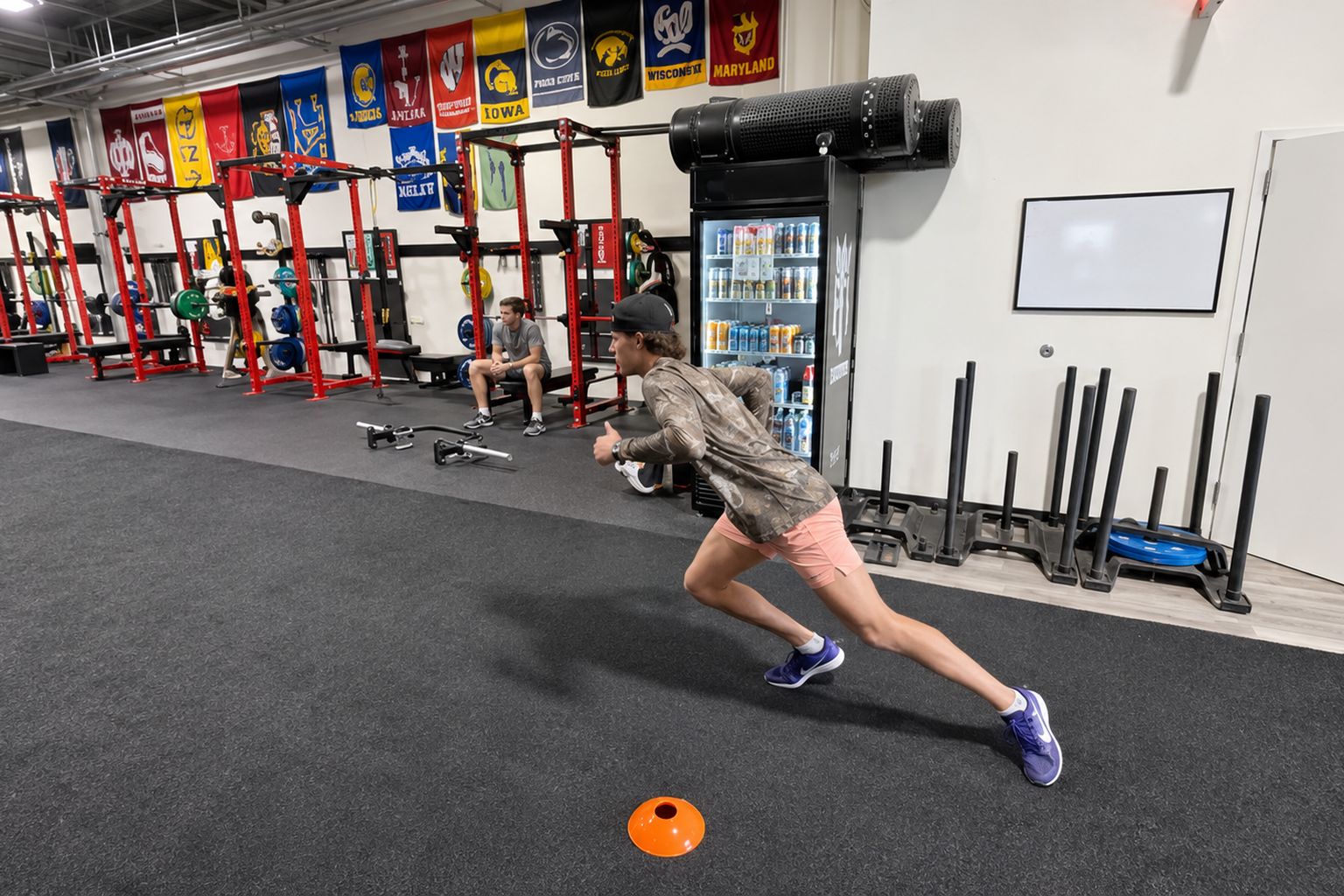
Speed isn’t something you cram for in the six weeks before tryouts. It’s a skill and a quality you build, protect, and sharpen all year long.
Every spring and summer we hear it: “My athlete needs to get faster before the season.” The intent is right. The timeline is the problem. Speed comes from coordination, posture, and the ability to put big force into the ground fast. Those things take months of consistent, high-quality exposure to develop. And they fade quickly when you stop training them.
That’s why I coach speed year-round. My approach borrows from sprint coaches I respect, like Les Spellman and Brian Kula, but it’s built around what I’ve seen work with our athletes at PR Strength.
Speed is a skill
I start from a simple idea: sprinting is a skill, and skills are learned through repetition and good coaching. Fast athletes aren’t just strong. They’re organized. They hold good posture, keep their rhythm, and let the body work as one elastic unit.
That means speed work at PR Strength isn’t just “run hard and hope.” It’s coached, and it’s managed and monitored on a regular basis using VALD ForceDecks and laser timing gates:
- Posture and alignment so force goes into the ground, not lost through a collapsing trunk
- Rhythm and timing so the arms and legs work together instead of fighting each other
- Front-side mechanics so the athlete strikes the ground underneath them, not out in front
- Elasticity so the athlete bounces off the ground instead of pushing through it
Skills need frequent practice to stick. A young athlete who learns good mechanics in January and doesn’t sprint again until May will lose most of it. Short, frequent practice is what makes good mechanics automatic. That’s why speed can’t be a once-a-year project.
Train fast to be fast
My rule is direct: if you want to be fast, you have to sprint fast, often. Not conditioning disguised as speed work. Not 20 reps until everyone is gassed. Real sprints, at or near top speed, with full rest between reps.
A few principles drive how I program it:
- Quality over volume. Fewer reps, done fast, beat many reps done tired. Once speed drops off, the rep stops building speed.
- Max-velocity exposure. Athletes need to regularly touch top speed. That’s what builds it and what protects the hamstrings when game day asks for it.
- Measure it. Timing every sprint keeps intent high and shows progress in real numbers.
- Sprint all year, including in-season. Speed is maintained the same way it’s built: by sprinting.
This is where most athletes fall short. Practice is full of running, but very little of it is true max-effort sprinting with rest. Over a season, athletes get fitter and slower.
Why it has to be year-round
Put those two ideas together and the case is clear. Speed is a skill that needs frequent practice, and a quality that needs regular high-speed exposure. Neither works in short bursts.
Speed fades fast. Top-end speed and power are some of the first qualities to drop when training stops. An athlete who trains hard all summer and then only plays their sport all fall often starts winter slower than they finished August.
Development takes time. Young athletes are growing, and their coordination shifts as they do. Steady coaching through those changes keeps mechanics clean instead of starting over every off-season.
In-season is not off-season for speed. A short, sharp sprint session once or twice a week keeps athletes fast when it matters most, without adding fatigue.
Fast and healthy go together. Hamstring strains often happen when an athlete hits a speed in a game they haven’t touched in training. Regular sprint exposure prepares the body for that demand.
What a year of speed training looks like
The goal changes through the year, but sprinting never leaves the plan.
| Phase | Speed focus | Strength & power focus |
|---|---|---|
| Off-season | Learn and clean up mechanics; build acceleration and top speed | Build strength and force; heavier lifting and jumps |
| Pre-season | Sharpen top speed, change of direction, and sport-specific sprints | Turn strength into power; faster, more explosive lifts |
| In-season | 1–2 short, high-quality sprint sessions per week to hold speed | Maintain strength with low-fatigue lifting |
The off-season is where the biggest gains happen. Pre-season turns those gains into game speed. In-season protects everything the athlete worked for.
How our ADP puts this to work
Our Athlete Development Program (ADP) is built around this year-round approach. It isn’t a summer camp or a six-week speed clinic. It’s a long-term plan that adjusts with your athlete’s season.
Here’s what that looks like at PR Strength:
- We test, not guess. Every athlete is evaluated with VALD ForceDecks force plate profiling and laser timing gates, so we know exactly where they’re fast and where they’re leaking speed.
- Speed is coached like a skill. Posture, rhythm, and mechanics are taught and refined every session.
- Every sprint has intent. Timed reps, full rest, and real max-velocity work.
- Training follows the season. Off-season, pre-season, and in-season blocks are built around your athlete’s calendar.
- Parents see the progress. Quarterly report cards show what’s improved, in real numbers.
Ready to get faster, and stay fast?
Every athlete starts with a 1-hour evaluation ($105) so we can build their plan from real data. Not sure yet? Book a free 15-minute consult with our coaches at PRStrengthTraining.com.
PR Strength · 18761 N Frederick Ave, Unit T, Gaithersburg, MD · @pr.strength
Ready to Get Stronger, Faster, Better?
Connect with PR Strength!
Sign up to get expert tips, training insights, and exclusive offers from PR Strength!